Module Detail

Inventory Control

Inventory Control provides the ledger discipline required to connect planning, fulfillment, and finance without stock ambiguity.

Module snapshot

Trusted stock accuracy across movement-heavy operations

Primary outcomeTrack on-hand, allocated, in-transit, and quality-hold inventory with auditable movement visibility.
Integrations4 governed touchpoints
Automations4 execution patterns
Pain Points

The operational friction this module resolves

The page structure is built to help enterprise buyers and operators see where value is unlocked before implementation begins.

Inventory blind spots

Teams cannot see which quantity is sellable, reserved, or held against quality checks.

Unreliable adjustments

Manual stock correction without root-cause visibility erodes trust and margin.

Disconnected movement records

Transfers, receipts, picks, and returns often fail to reconcile across systems.

Workflow Visualization

A concise operating sequence from trigger to business outcome

Workflow sections can later be auto-generated from module metadata and workflow contracts while preserving this visual treatment.

Step 1Inventory Manager

Capture stock state

Maintain lot, bin, warehouse, and valuation state in a unified inventory ledger.

Step 2Warehouse Supervisor

Execute controlled movements

Handle transfer, issue, receipt, return, and cycle-count events with traceable reasons.

Step 3Cost Accountant

Reconcile for finance and service

Expose adjustment patterns, shrinkage, and fulfillment blockers to business owners.

Screens Experience

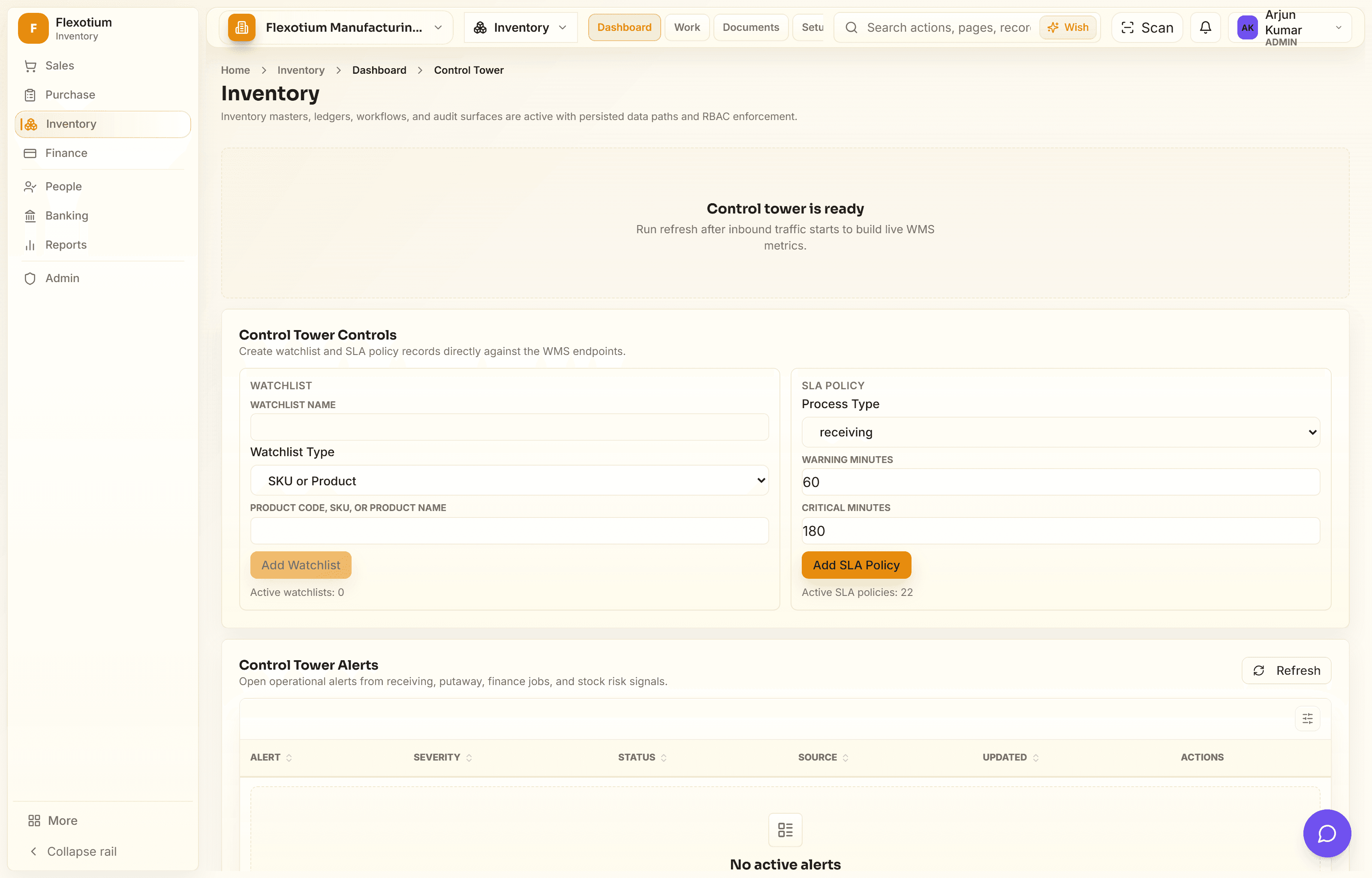
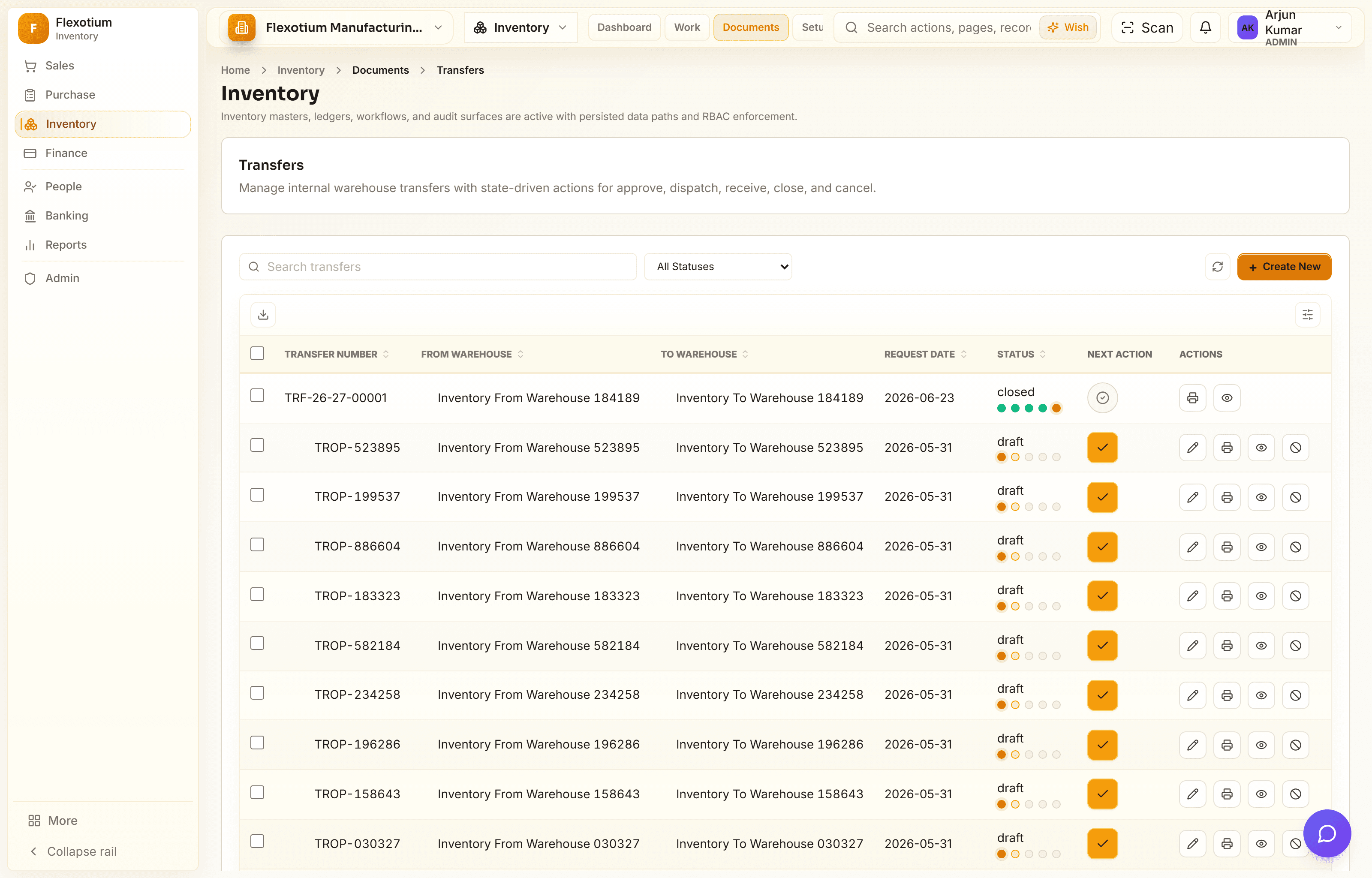
Command-center interface placeholder

Swap this placeholder with module screenshots, guided walkthrough captures, or short product videos without changing the page contract.

Technical Architecture

Core implementation slices

Inventory ledger service
Warehouse and lot-location dimensions
Valuation bridge into finance
Feature Set

Capabilities designed for enterprise execution

These are structured as reusable page sections so module metadata can later populate them automatically.

Ledger-first stock model

Every movement updates a traceable operational and financial record.

Multi-state availability

Differentiate on-hand, reserved, blocked, and in-transit stock clearly.

Cycle count readiness

Coordinate counting plans, discrepancy investigation, and approval workflows.

Fulfillment-aware reservations

Link demand allocation to service commitments and replenishment context.

KPIs

Outcome framing for buyers and operators

Each module carries a KPI section to help teams measure adoption and business value after rollout.

Stock Accuracy

99.3%

Improved accuracy when the ledger becomes the single movement source.

Adjustment Review

-45%

Lower investigation load through reason-coded stock events.

Reservation Visibility

Real-time

Sales and operations can see availability impact without waiting for batch syncs.

Integrations

Connected systems

Procurement receipts
Sales allocations
Warehouse scanners
Finance valuation controls

Automation

Execution accelerators

Low stock replenishment triggers
Discrepancy escalations
Bin replenishment tasks
Cycle count scheduling

Role-Based Usage

Who this module serves

Inventory Manager

Owns stock policies and accuracy performance.

Warehouse Supervisor

Coordinates movement execution and team capacity.

Planner

Uses availability signals for replenishment and commitments.

Cost Accountant

Reviews valuation impact and adjustment trends.

Next Step

Evaluate Inventory Control in context

Continue with tailored demo planning, related academy tracks, and the underlying documentation system that explains implementation details.